

Darmstadt, Germany. In order to close the “performance gap” that often occurs with energy-efficient buildings, 20 partners from across Europe have joined forces in the new Built2Spec project. The aim is to provide construction specialists with tools for mobile applications using smartphones and tablet computers – from easy-to-use 3D visualisation and compact solutions for airtightness measurements to a BIM-based data platform for on-site quality assurance. The most important objectives of the Built2Spec project were presented at the Sustainable Places conference which was held in Savona in Italy last week.
The discrepancy between the consumption values calculated in advance and …
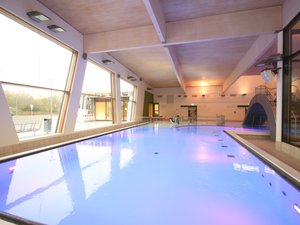
Darmstadt/Germany. The municipal swimming pool operator in the German city of Lünen ventured into unchartered terrain when it decided to build its indoor swimming pool to the Passive House Standard some years ago. This courageous step has now paid off, as the monitoring results show. The savings in terms of energy consumption, for heating as well as for electricity, are substantial compared with other swimming pools. The monitoring carried out by the Passive House Institute also shows that even further optimisation is possible during the building’s use. The beacon in Westphalia thus forms an outstanding basis for subsequent projects. Details …
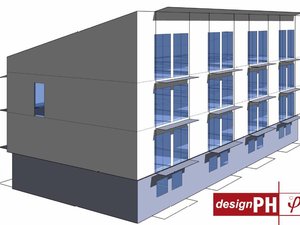
Darmstadt/Innsbruck. Passive House planning has never been more convenient. The new designPH, a 3D model interface developed by the Passive House Institute, allows for graphic input of energy related design data. Details relating to the thermal building envelope and shading are entered automatically and can be optimised if necessary. The treated floor area can be gradually refined in order to simplify the design process. The results can be exported into the Passive House Planning Package (PHPP 8) with just a few clicks.

Darmstadt/Ravensburg. The new Museum of Arts in Ravensburg, Germany, not only showcases important works of art – the building itself is a masterpiece worth seeing: the first museum in the world built to the Passive House Standard. The inauguration ceremony, held on the second weekend in March 2013, celebrated not just a new meeting point for art lovers in the historical city centre, but also marked a highlight in energy-efficient construction.