
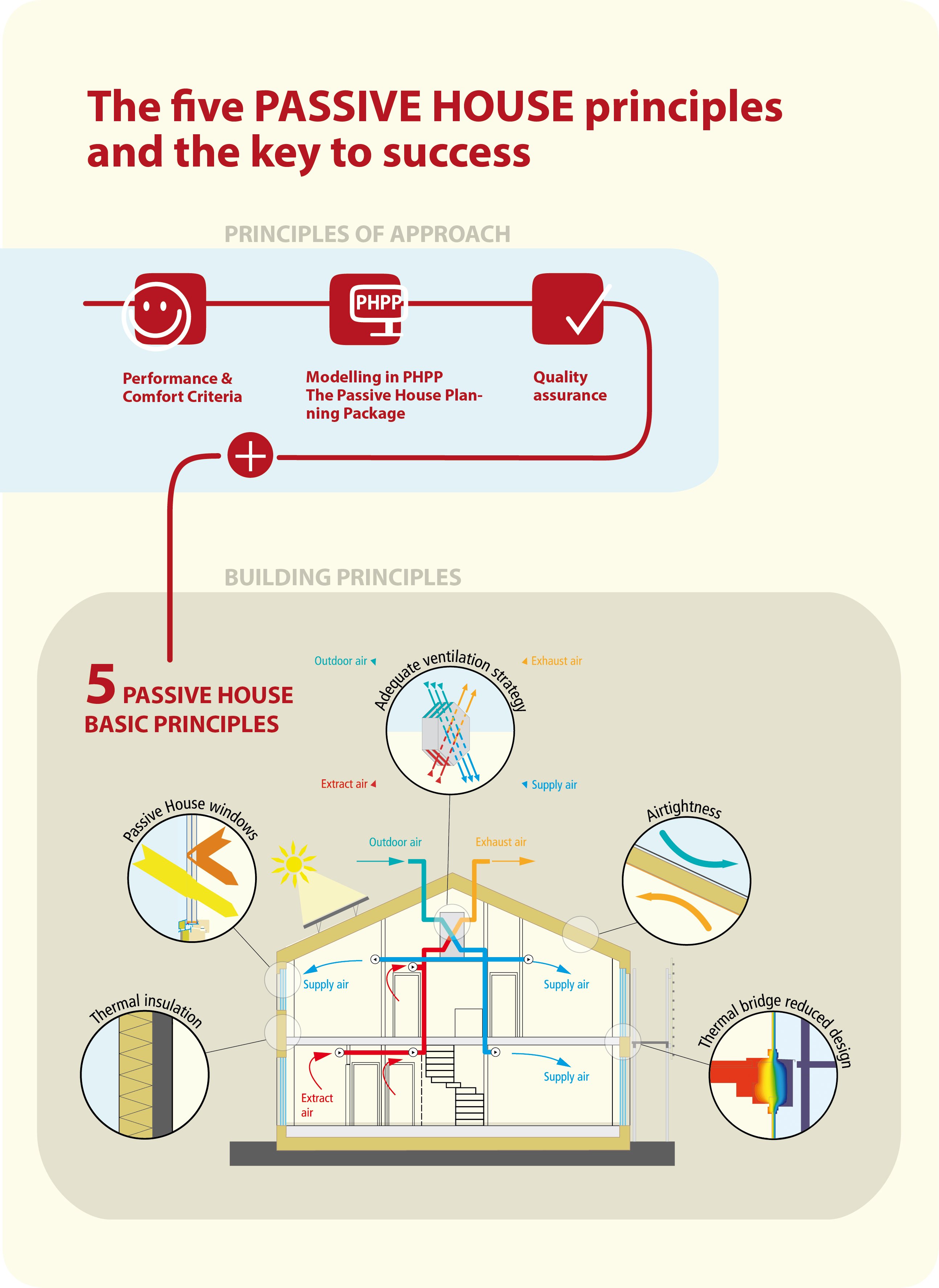
The Passive House Institute has developed the building standards Passive House and EnerPHit on the basis of scientifically sound physical principles and application-oriented research results and has formulated specific building criteria to ensure reliable quality. The two building standards are based on five core principles: A very good thermal insulation, highly energy-efficient windows, controlled mechanical ventilation with heat recovery, no thermal bridges, and airtightness.
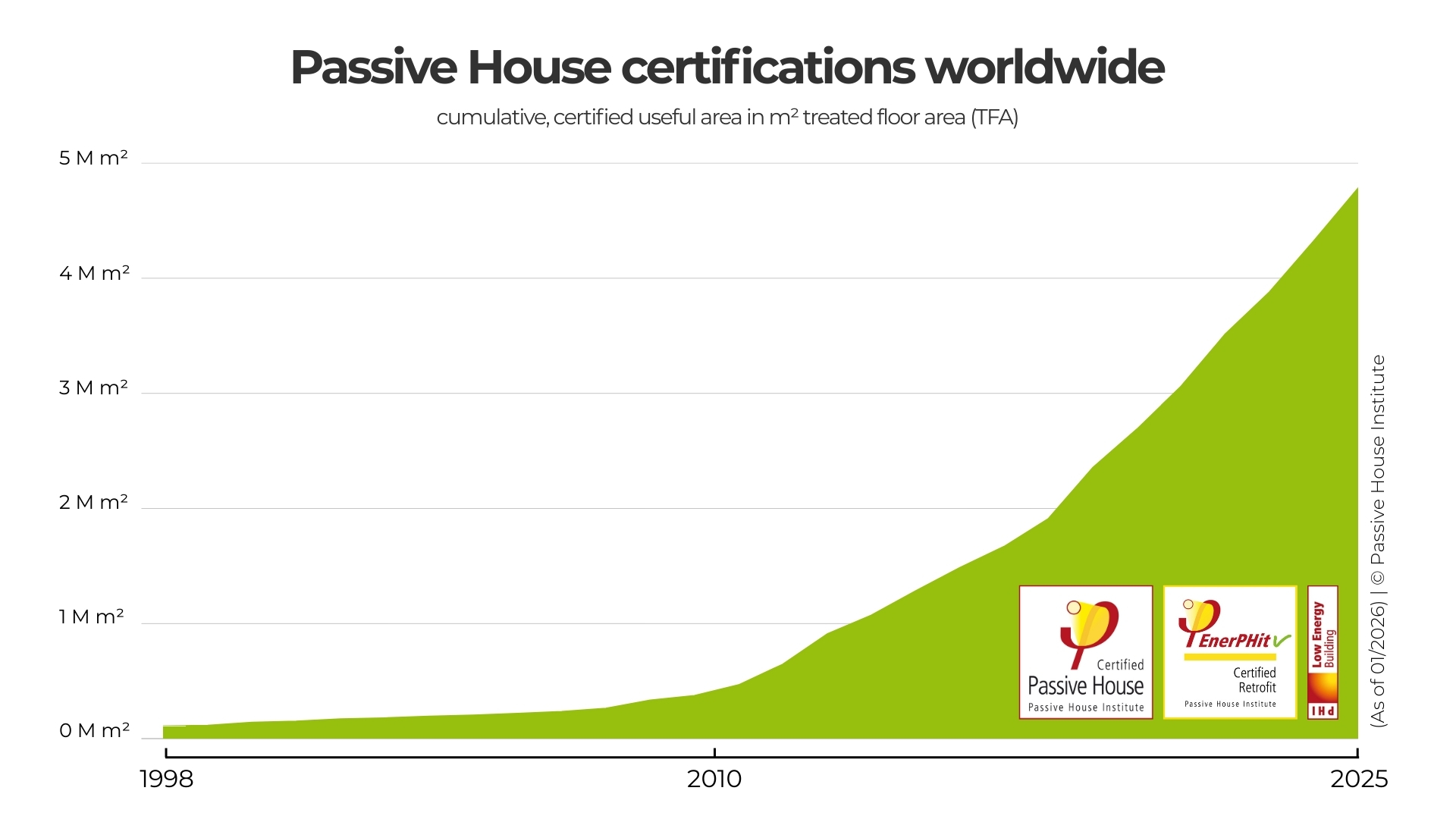
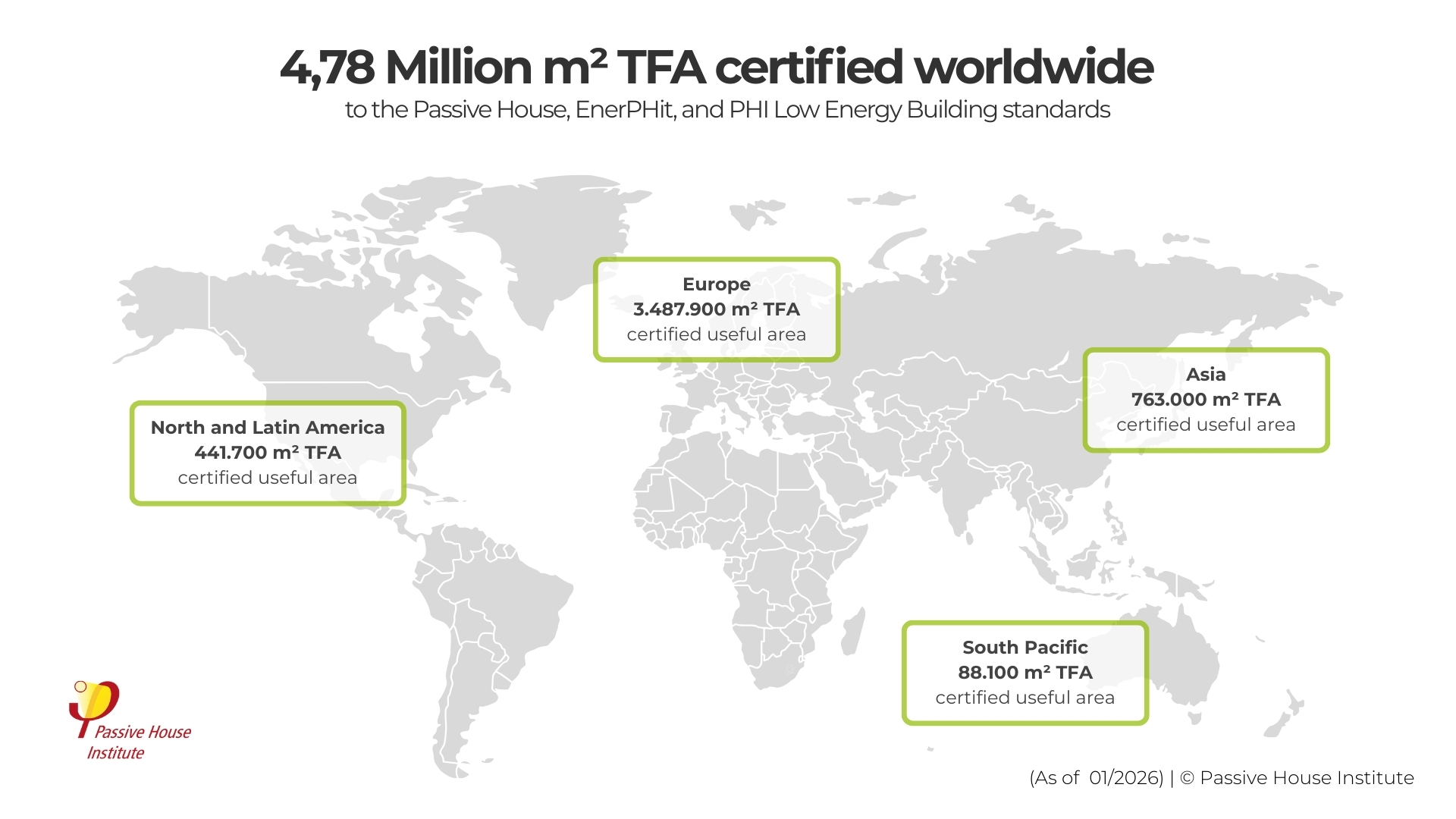
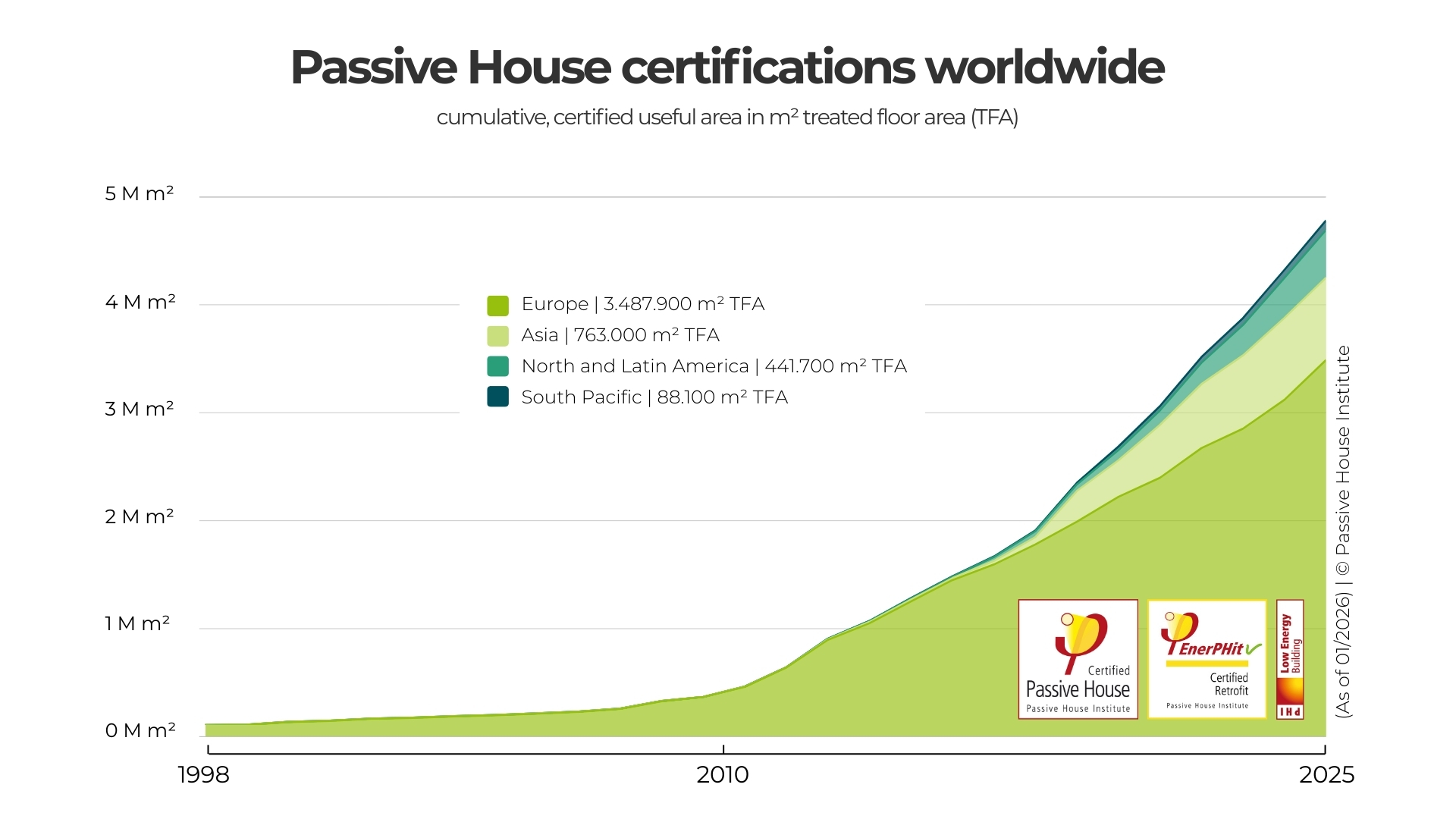
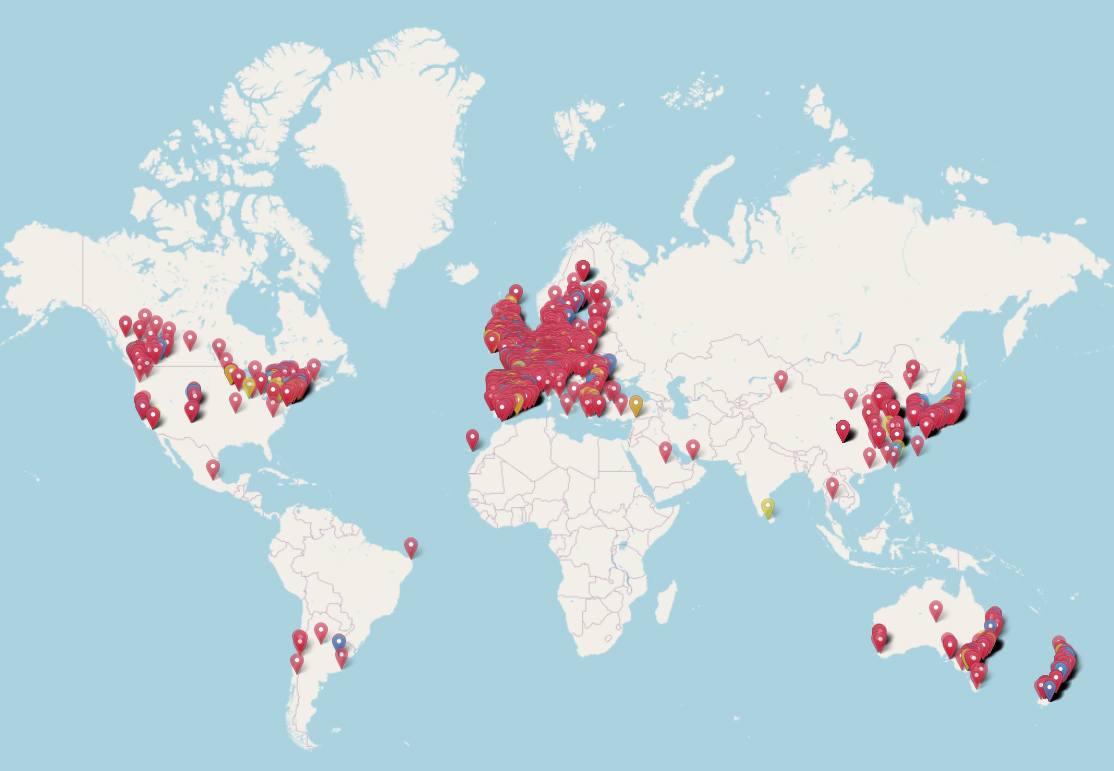
Everyone is allowed to build a Passive House or retrofit an existing building to the EnerPHit standard. As the graphs and the interactive building map on the right highlight, Passive Houses and EnerPHit retofits have become very popular building standards worldwide.
You are not yet familiar with the two building standards and would like to expand your knowledge in this regard? On Passipedia - the Passive House Resource - you can find everything you need to know and much more.
You are interested in the details? Please feel free to jump directly to the certification criteria.

Passive Houses provide a very high level of comfort coupled with an extremely low energy consumption. The Passive House standard offers excellent cost-effectiveness, especially for new buildings. The slightly higher initial investment is quickly recouped thanks to the significant energy savings during the life cycle of the building.

EnerPHit (say "Enerfit") is the established standard for the energy-efficient retrofit of existing buildings with Passive House components. Taking into account that structural conditions often make it difficult to achieve the Passive House standard in existing buildings, this standard allows a slightly higher energy consumption as long as all comfort criteria are still met. The standard can be proven either based on the "energy demand method" or on the "building component method". Step-by-step retrofits with an EnerPHit retrofit plan are also possible. This plan can be pre-certified.

The PHI Low Energy Building standard was developed for buildings that aimed at but then barely missed the Passive House standard (for example because they fail to meet the airtightness requirement).
Pilot projects welcome! - The following standards are currently being developed:
EnerPHit Unit is a variant of EnerPHit with the building component method. Single retrofitted residential and commercial units in buildings with more than one unit can be certified with this option. For this, the unit under consideration must comply with all the requirements for EnerPHit Classic with the components method, except for:
Airtightness: the requirement is met if the air permeability value is qE50 ≤ 1.0 m³/(hm²)
Primary energy: if the heating, cooling or DHW systems are centralized, verification of the PER requirement can be carried out with a hypothetical future supply system with HP.
In addition, it should be shown that all connections toward adjacent conditioned spaces are done in such way that the risk of mould growth is not increased and the insulation layer will be continuous if the adjacent apartment is renovated in the future. The rest of the building is not taken into account in the certification.
The preliminary version of the developed criteria is available upon request and can already be used for project certification with the written confirmation of the certifier and the Passive House Institute. If you are interested in getting EnerPHit unit certification, please send us an email.
This certification track is being developed for non-residential buildings designed to be generally suitable for office use and which the owner rents out in part or entirely under the method known as core & shell. With this method, in addition to having the full thermal envelope completed, buildings must include at least: units and vertical distribution for ventilation, heating, cooling and DHW; lighting in common areas; lifts; external shading (if needed). All other systems and equipment are installed by the tenant. A document with the technical minimum requirements for the tenant fit-out (TMRT) must be produced for certification and included as part of the lease agreement. Tenants install the fit-out in the leased space according to the TMRT.
The preliminary version of the developed criteria is available upon request and can already be used for project certification with the written confirmation of the certifier and the Passive House Institute. If you are interested in getting EnerPHit unit certification, please send us an email.
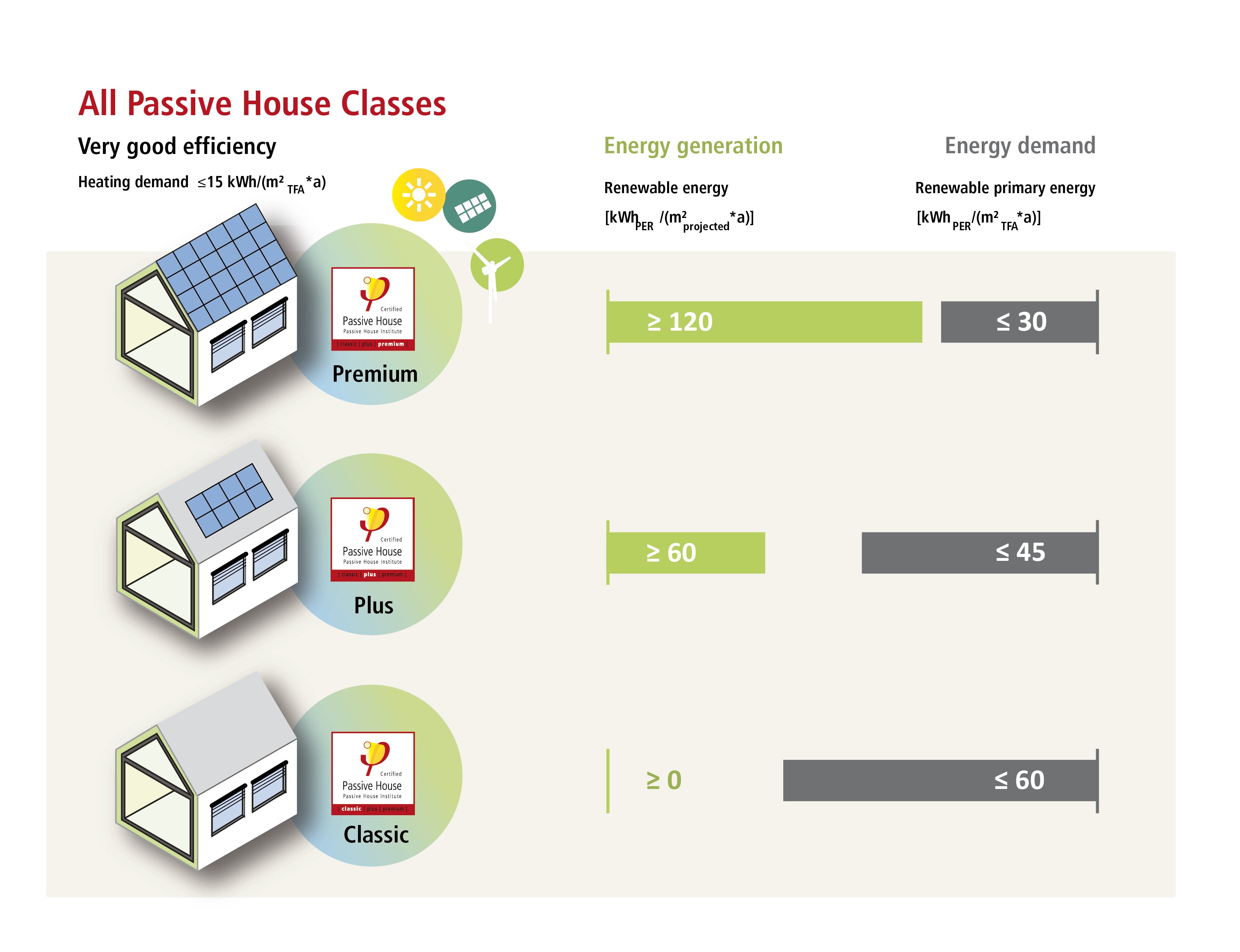
If possible, it is highly recommended to upgrade Passive Houses and EnerPHit retrofits with the generation of renewable energy. Upgrades are then reflected in the certification class:
Classic: Passive House or EnerPHit retrofit without renewable energy generation
Plus: On an annual average, energy generation equals energy consumption
Premium: On an annual average, significantly more energy is generated than consumed
For categorisation into Classic, Plus and Premium, the demand for renewable primary energy of the entire building (including heating, hot water generation, household electricity) is compared with the generation of renewable primary electricity.
All Passive House and EnerPHit classes can be achieved in all climate zones worldwide. The building standards can be implemented in residential and most non-residential buildings (e.g. ranging from offices to schools and swimming pools).
The team at the Passive House Institute and the certified Passive House designers/tradespersons/consultants worldwide are happy to support and advise the planning team individually tailored to your construction project (new build or renovation).
The consultation phase is used to improve the building design with respect to energy efficiency and cost-effectiveness. The earlier the Passive House certifier is involved in the project planning, the smoother and more cost-effective the construction project can be managed. In principle, however, certification is also possible after completion of the building, as long as it meets the certification criteria.
During the building certification process, the implementation plan is carefully and comprehensively reviewed. After checking the energy balance calculation, the certifier will point out any necessary corrections. A final inspection and further evidence from the construction work (airtightness test, adjustment protocol for the ventilation system, site manager's declaration) complete the quality control. Only if the precisely defined criteria are met without exception will a certificate be issued (including a house plaque upon request).
Certification ensures that the building actually achieves the desired energy standard and that it lives up to its promise of excellent air quality, a comfortable indoor climate and reliably low energy costs. This also increases the value of the property.
Many building owners prefer to replace old building components step by step rather than retrofitting their building as a whole in one go. This approach is indeed recommended as it is the economically most viable way to retrofit a building.
Before starting the first measure, however, an overall plan should be drawn up for the current and all subsequent retrofit steps - right through to the completely retrofitted state of the building. This is the only way to ensure that all steps dovetail well and that the builders can enjoy a cosy building with low energy costs after the final step.
The EnerPHit Retrofit Plan (included in the PHPP tool) offers such an overview. As additional quality assurance, the Passive House Institute offers pre-certification as an EnerPHit (or even Passive House) project. In addition to having developed a carefully prepared EnerPHit Retrofit Plan, the prerequisite for pre-certification is that the first retrofit step has already been implemented and that energy savings of at least 20 % have been achieved. The pre-certificate gives clients and designers the certainty that the targeted standard will actually be achieved once all retrofit steps have been implemented as planned.
The certifier does not necessarily have to visit the building to be certified. Therefore, you are free to choose a certifier irrespective of where they are based.
The Passive House Institute offers certification to the Passive House, EnerPHit and PHI Low Energy Building standards worldwide. Please get in touch with us so we can send you an offer.
Passive House Institute (German office)
Languages: de | en | es | it | ro | pl | bg | zh
Send us an email
Passive House Institute (Austrian office)
Languages: de | en | hu
Send us an email
Furthermore, the following certifiers have been accredited by the Passive House Institute to certify Passive Houses, EnerPHit retrofits and PHI Low Energy Buildings in its name worldwide:
Partners of the Passive House Institute have translated the certification criteria into various other languages. Check out the overview of all available translations.
Caution: Please be aware that the translations of third parties have not been verified. Therefore, building certifications must be based on the building criteria officially published by the Passive House Institute (English, German, Spanish).
For certification projects dating back to April 2023 or earlier the criteria for buildings in place at the start of the certification process apply.
Please follow the guidelines for the use of logos, seals and plaques issued by the Passive House Institute.
Questions or comments? The building certification team will be happy to assist you directly by email or by telephone at (+49) 6151 82699-0.